Teaching philosophy
“I’ve learned that people will forget what you said, people will forget what you did, but people will never forget how you made them feel” ~ Maya Angelou
Life really is a collection of passing experiences, feelings. Some stay with you, some less so, some are positive and recounted with nostalgia, while others need to be continually processed. This is true of human experience, and certainly in the classroom. The joy I get from teaching and sharing my passion for ecology and the environment is rooted in my desire to always be learning. What better place to do that than the classroom, whatever defines a classroom in each specific context, a place where curious minds gather, each one bringing their own unique perspective shaped by experience. One of the most important indicators to me that a class, a specific lesson, or an assignment was a success, goes beyond whether students were able to communicate understanding of the material, but also how immersed they felt in the process.
We live in a fast paced, technology-focused world where information is being constantly and rapidly gathered, compiled, processed, and presented. This can certainly feel overwhelming, yet having the tools to sift through it, identify the pieces that are reliable and relevant, and integrate it with one’s own existing knowledge provides the necessary structure to build robust understanding. Such an approach is encapsulated within the process of science framework. This structure of thinking, curiously observing the world, asking questions, and discovering ways to answer those questions, is one of the most important skillsets for current and future generations to have for managing the challenges of our time.
The process of science framework, systems thinking, and embracing uncertainty all contribute to building the fundamental scaffolding from which I design my own lessons. Such an approach gives students the space and time to access their own prior knowledge and experiences, sometimes individually, other times with their peers, while ultimately incorporating their reflective understanding with the course material. Not only do students develop a sense of ownership over what they are learning but they also guide the progression of the course within the conceptual boundaries described for the course or lesson. You can see an example syllabus here
These student-centered approaches to teaching provide real-time feedback to instructors on student understanding, along with an intellectual connection between students and instructors, and a natural opportunity for students to learn from each other, and for instructors to learn from students. Such exposure to new perspectives, ideas, or interesting facts between people from different backgrounds creates space for building empathy and compassion, while finding creative and novel approaches to confront shared challenges.
In recent student evaluations from my Pollination and food production in a changing world course at the Arava Institute for Environmental Studies (AIES), students describe an appreciation for regular activities and reflections that “…. go beyond the lecturer’s perspective”, or as having learned “….to think critically about pollination from a systems perspective….”, and the importance of “…. working within the broader ecology of the ecosystem”.
Arava Institute for Environmental Studies
Pollination and food production in a changing world
Syllabus for Fall 2026 semester
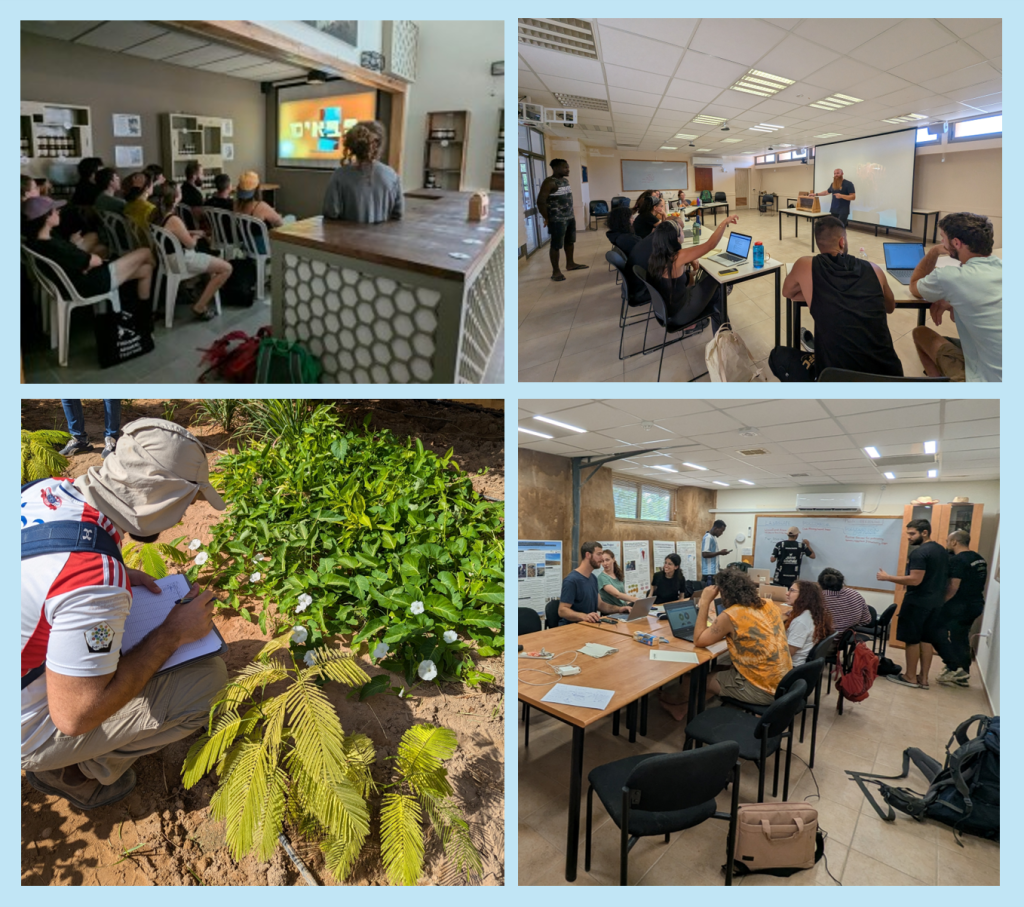
The AIES context: This course is part of a collegiate level sustainability and environmental peacebuilding academic program at AIES that brings together regional Israeli, Palestinian, and Jordanian students, together with international students from around the world. For 1-2 semesters students take classes and work on projects that encompass diverse fields of study ranging from ecology, conservation, water management and energy production to sociology, geopolitics, and community building, studying and learning through shared experiences.
The course: In the first half of this course, students build an understanding of pollination as a process and learn how to identify effective pollinators from less effective or non-effective pollinators based on the characteristics and life history of a given plant or pollinator species. Through exploring plant-pollinator interactions students learn fundamental ecological concepts. For example…
1. Students can describe whether the outcome of species interactions is beneficial for both partners (e.g., mutualistic plant-pollinator interactions), or exploitative (e.g., herbivory by crop pests, or would be pollinators that manage to take food rewards from flowers without facilitating pollination).
2. Students build an understanding of how ecological systems are organized, from populations, to communities, and ecosystems.
During the second half of the course students explore the external factors that influence plant pollinator interactions, such as climate and land use change, and the exposure of pollinators to stressors (e.g., poor nutrition, pests and disease, predation, and agrochemicals).
Throughout the course students integrate their new knowledge through short case studies using real-world data, with the end goal being the design of an Action Plan for the establishment of a sustainable food production system in a local or regional context of their choosing. By structuring the course within the process of science framework, and with direct links to the lived experiences of students, the path taken towards the same conceptual understanding differs each semester, as students maintain a level of control over the learning path.